
Green Jobs in Texas 2026: Why the Energy Capital of the US Is Becoming a Clean Energy Hub
Texas leads the US in wind, is racing in solar, and Houston is repositioning as the energy transition capital. Here's where the green jobs actually are.

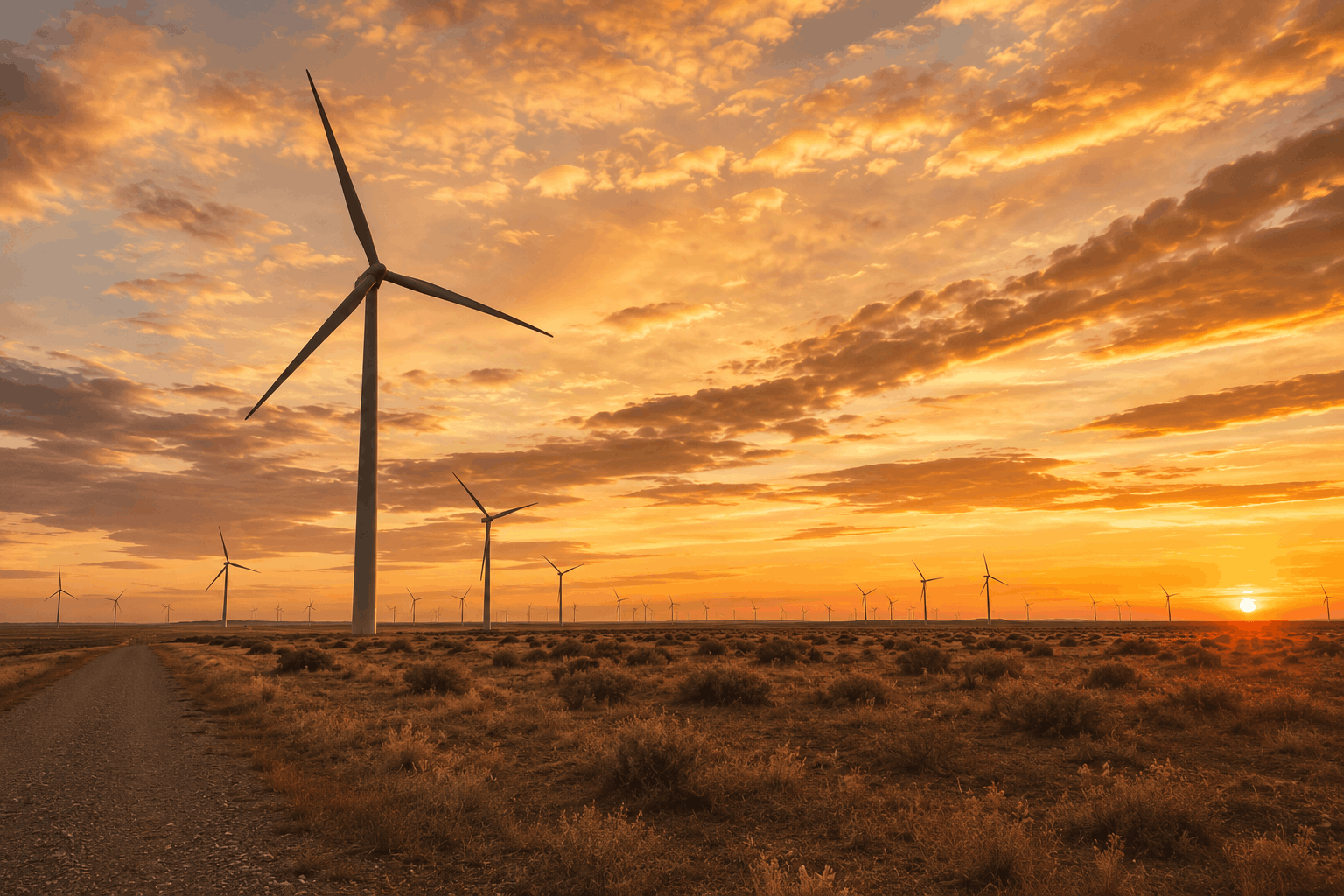
Texas produces more oil and gas than any other US state. It also leads the nation in wind energy capacity and is adding solar faster than nearly any state in the country.
Those two facts don't contradict each other. They explain each other.
The same transmission infrastructure that moves oil across the Permian Basin moves wind power from the Panhandle to Houston. The same engineers who designed offshore platforms in the Gulf of Mexico are designing offshore wind foundations along the same coastline. The same financial institutions that structured oil and gas project finance in Houston are now structuring IRA tax equity deals for solar developers. The same flat land that made West Texas ideal for oil extraction makes it ideal for utility-scale solar.
Texas isn't tolerating the energy transition. It's applying the skills, capital, and infrastructure that made it the global energy capital to a new fuel source — and doing it faster than most people outside the industry realize. The job market reflects that shift, and it's already significant.
The Scale of What's Happening
Before the city-by-city breakdown, the numbers that frame everything else.
Texas ranks first in the US for installed wind capacity — over 40 gigawatts, more than twice the next closest state. Texas ranks second for solar and is closing the gap with California faster than most energy analysts predicted three years ago. The ERCOT grid — Texas's independent power grid — regularly sees renewable energy covering 30 percent or more of total demand during peak generation windows.
Since the IRA passed in 2022, Texas has attracted more announced clean energy investment than any other US state — over $70 billion in projects across wind, solar, battery storage, hydrogen, and carbon capture. The E2 Clean Energy Economy report consistently ranks Texas in the top three states for clean energy employment.
This is not a state pivoting reluctantly. It's a state that recognized the energy transition as an economic opportunity and moved on it.
Houston — The Energy Transition Capital
No city in the US is a more interesting clean energy story right now than Houston.
Home to more energy company headquarters than any other city in the world, Houston is doing something unusual: it's not choosing between oil and gas and clean energy. It's layering an energy transition economy on top of the existing infrastructure. The result is a city with a uniquely deep pool of transferable expertise — engineers who understand large-scale energy systems, financiers who understand energy project risk, lawyers who understand energy regulation — all of whom are now being recruited into clean energy roles.
The Greater Houston Partnership's Houston Energy Transition Initiative (HETI) has explicitly positioned Houston as the global capital of the energy transition, not just the US capital. That's an ambitious claim, but the fundamentals support it. Shell, BP, and Chevron all have significant low-carbon and energy transition operations based in Houston. Clean energy developers have opened Houston offices specifically to access the engineering workforce rather than building from scratch in other cities.
What's being hired in Houston:
Hydrogen development — the Gulf Coast is emerging as the primary US hydrogen hub, driven by proximity to industrial demand, existing pipeline infrastructure, and DOE hydrogen hub funding
Carbon capture and storage — Houston is the center of US carbon capture project development, with Occidental, ExxonMobil, and Air Products all running significant CCS programs from Texas
Energy transition strategy — senior roles at oil majors building low-carbon business units
Clean energy finance and investment — tax equity structuring, project finance, IRA credit monetization
Offshore wind supply chain — the Gulf Coast's existing offshore infrastructure is being adapted for wind, with supply chain and logistics roles emerging
Salary context for Houston: Clean energy roles in Houston generally pay 10 to 15 percent below New York or San Francisco equivalents in base salary. On a cost-of-living adjusted basis, the gap largely disappears — and for oil and gas professionals already based in Houston, the transition can happen without relocating.
West Texas and the Panhandle — Where the Installations Are
Get the weekly green briefing
No noise. Just insights.
Drive west from Houston and the clean energy landscape becomes physical. The Permian Basin region and the South Plains stretching north toward Amarillo and Lubbock are where the bulk of Texas's wind and solar capacity is being built, maintained, and expanded.
The Panhandle is wind country. Massive wind farms stretch across the flat plains of Lubbock, Amarillo, and Abilene, taking advantage of some of the strongest and most consistent wind resources in North America. West Texas — particularly the area around Midland and Odessa — is experiencing a dual economy: oil and gas production at record levels alongside rapid utility-scale solar installation, driven by the same land availability and transmission access that built the oil industry.
Roles concentrated here:
Wind turbine technician (GWO certification, preventive and corrective maintenance)
Solar installer and PV technician (NABCEP certification, utility-scale construction)
Operations and maintenance (O&M) technician — field-based, project-site
Construction manager and site supervisor — managing installation crews
SCADA and controls technician — monitoring and optimizing generation assets
IRA wage floor impact: On projects claiming full IRA tax credits, installer and technician wages are floored at Davis-Bacon prevailing wage rates for the relevant trade and county. In West Texas, this typically floors electrical trade wages at $28 to $38 per hour on qualifying projects — significantly above pre-IRA market rates.
One structural challenge in this region: workforce housing. Many of the best wind and solar sites are remote, and attracting and retaining skilled technicians in areas with limited infrastructure is an ongoing constraint for developers. IRA apprenticeship requirements are creating a partial solution — several West Texas community colleges have launched registered apprenticeship programs in partnership with local developers, creating a structured training pipeline for the region.
Austin and Dallas — The Corporate Sustainability Layer
Not all Texas clean energy jobs are in the field.
Austin has developed a distinct clean energy identity shaped by its tech sector. Tesla's Gigafactory in Austin has driven a cluster of EV supply chain and battery technology hiring. The city's concentration of tech companies — Dell, Oracle's Austin operations, and dozens of mid-size software firms — means corporate sustainability roles here look more like Bay Area equivalents than the project roles in West Texas: ESG reporting, climate risk analysis, sustainability strategy, climate tech product development.
Austin also has a growing climate tech startup ecosystem — companies building software for carbon accounting, grid optimization, and clean energy analytics. For career switchers from tech, this is often the most accessible entry point into the clean energy economy in Texas.
Dallas is the corporate sustainability hub for industries beyond energy. AT&T, American Airlines, large financial services firms, and major real estate companies are all building or expanding sustainability functions from Dallas. These are the white-collar ESG roles — sustainability reporting manager, ESG analyst, climate risk analyst — that appeal to finance, consulting, and legal professionals looking to pivot into green work without relocating to a coastal city.
Why Your Oil and Gas Background Is an Asset Here
This is the part most clean energy career guides leave out.
Texas clean energy employers aren't looking past oil and gas experience. In many cases, they're specifically recruiting for it. The technical overlap between the two industries is substantial — not metaphorical, but direct and specific.
Oil and gas background | Clean energy application |
|---|---|
Reservoir engineering | Geothermal development, underground carbon storage site assessment |
Pipeline engineering | Hydrogen infrastructure, CO2 transport for carbon capture |
Offshore platform operations | Offshore wind installation, O&M, marine logistics |
Energy trading and risk management | Renewable energy trading, battery storage revenue stacking, capacity markets |
Project finance and tax equity | IRA tax credit structures, solar and wind investment |
Landman and right-of-way | Wind and solar land acquisition, lease negotiation |
SCADA and instrumentation | Grid monitoring, renewable asset control systems |
Drilling and completions project management | Large-scale construction project management for wind and solar |
Companies like Occidental, Air Products, NextEra, and Ørsted are actively building recruiting pipelines into the oil and gas workforce in Texas. The framing is consistent: "We're not asking you to abandon what you know. We're asking you to apply it somewhere new."
For oil and gas professionals in Texas, the energy transition isn't a threat to navigate. It's the largest adjacent career opportunity in the state's history.
Top Employers Hiring for Green Jobs in Texas
Company | Focus area | Role types | Primary city |
|---|---|---|---|
NextEra Energy Resources | Wind and solar development | Project managers, developers, engineers | Houston, West Texas |
Invenergy | Wind, solar, storage | Development analysts, project managers | Houston |
Pattern Energy | Wind and solar | Engineering, development, finance | Houston |
Ørsted | Offshore wind, Gulf ambitions | Offshore engineers, supply chain | Houston |
Air Products | Green hydrogen, carbon capture | Engineers, project developers | Houston |
Occidental / 1PointFive | Carbon capture, DAC | Engineers, environmental analysts | Houston, West Texas |
Chevron New Energies | Low-carbon fuels, CCS, hydrogen | Energy transition strategy, engineers | Houston |
ERCOT | Grid operations | Systems engineers, analysts, market ops | Austin |
Cypress Creek Renewables | Solar development | Development, land, construction | Austin |
Tesla Energy | Battery storage, solar | Manufacturing, supply chain, engineering | Austin |
The clean energy capital of the United States isn't going to be California or New York. It's going to be Texas — because Texas has the land, the grid, the engineering workforce, the capital markets, and the institutional knowledge of how to build energy infrastructure at the scale the transition requires. The state isn't becoming something new. It's redirecting what it already is.
For candidates and employers watching from the outside, the window to get positioned in this market — before it's fully priced in — is still open. Barely.
Share this article

Founder of EcoRoles. I write about sustainability careers, ESG hiring trends, and the green economy — for professionals navigating the transition and teams building it.
LinkedIn